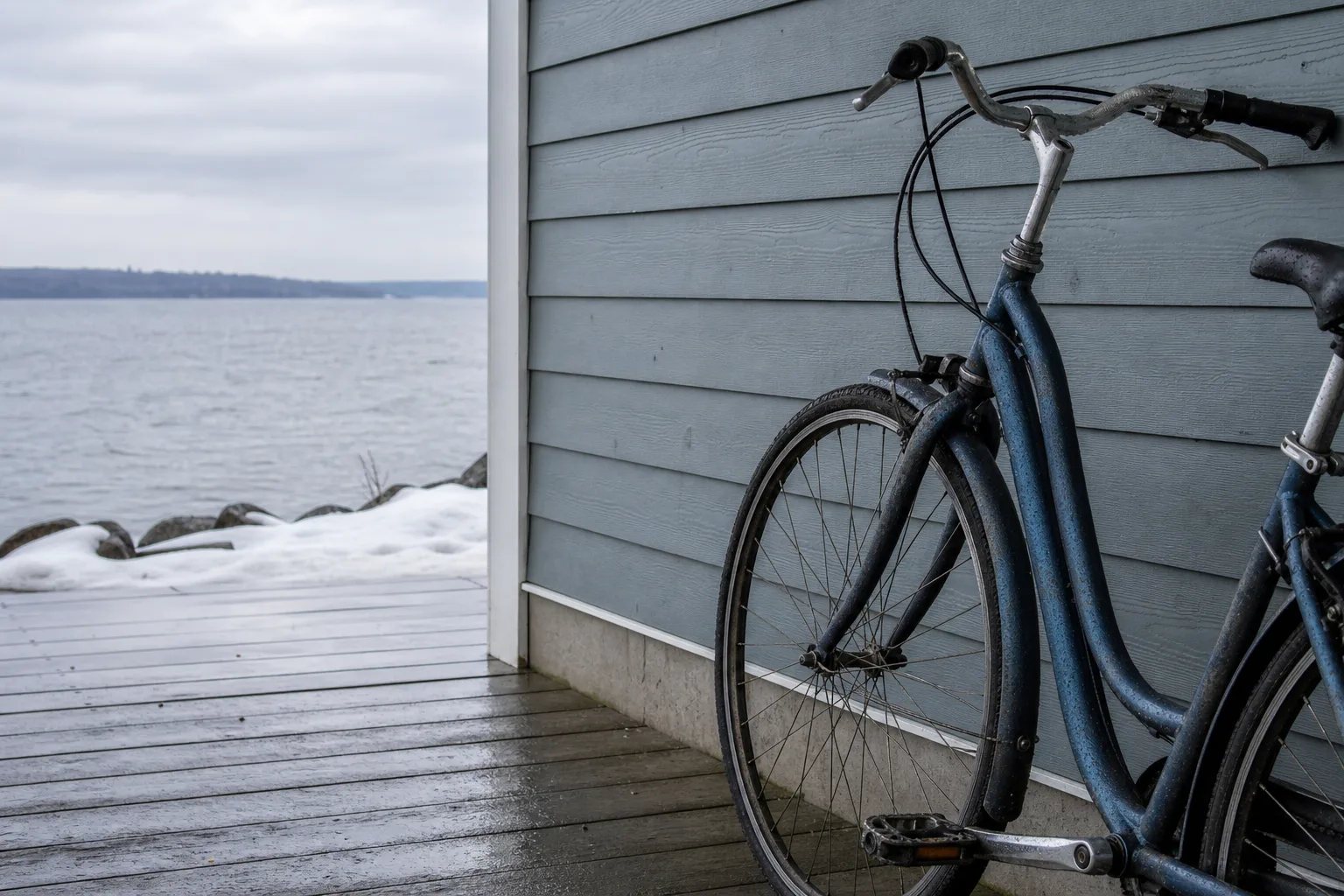
A bicycle that lives on a covered porch three blocks from the water does not rust the way people expect. The frame usually looks fine, because paint is good at its job, and the chrome fenders keep their shine for years if nobody scrubs them with anything abrasive. What fails is smaller and less visible: the braided steel inside a cable housing, the spring in a brake caliper, the seatpost where it meets the frame. Salt does not need rain. Humid air carrying chloride is enough, and a roof only slows it down.
1. The cables go first, and they go silently
Brake and shifter cables are the part a careful reader should check before anything else, because a cable can be seized solid while the outside of the housing looks new. Moisture wicks in at the ends, sits against the inner wire, and leaves a fine orange dust that binds the strands to the liner. The symptom is a brake lever that returns slowly, or a shifter that will climb into a higher gear but not come back down. Pull each lever, let it go, and watch whether it snaps back or drifts.
2. Chain rust is cosmetic until it reaches the rollers
Surface rust on the outer plates of a chain is ugly and mostly harmless; rust that has worked into the rollers and pins is a chain that will skip under load and chew the sprocket teeth. The test is not visual. Hold the chain and flex it sideways, then backward, and feel for links that resist or click stiffly rather than pivoting freely. A stiff link every few inches means the chain is done. A wet lubricant, thicker than the dry stuff sold for dusty climates, is the right choice near salt water because it displaces moisture instead of washing away.
3. Tires lose air faster than anyone budgets for
A tire left at riding pressure through a cold season will be soft by spring, and a soft tire sitting under the weight of a parked bicycle deforms at the contact patch, sometimes permanently on cheaper casings. Cold air alone drops pressure noticeably, and butyl tubes leak slowly regardless. The fix is dull and effective: pump the tires up before the bike is stored, check them once mid-season, and hang or lean the bike so the weight is off the wheels if there is a hook available. Sidewall cracking is what happens when nobody does this.
4. What is worth specifying at purchase
Some corrosion problems are cheaper to avoid in the showroom than to solve in the shed. Stainless spokes rather than plated steel, an aluminum seatpost with grease or anti-seize at the frame junction, stainless or coated cables with sealed housing, and aluminum rims instead of steel are the four that matter most on a bicycle stored outdoors. Steel rims rust at the braking surface and stop working in the wet long before they look bad. An internally geared hub, sealed against the weather, outlasts an exposed derailleur in this climate by a wide margin.
5. The seasonal hour, in order
Twice a year is enough if the order is right. Wipe the frame and fenders with a damp cloth and dry them, check tire pressure and inflate, then work the brake and shift levers a dozen times each and listen for anything sluggish. Put a drop of oil at every point where a cable enters or leaves its housing, wipe the chain clean and relubricate it, then check that the seatpost and stem still turn when the bolts are loosened. Finish by squeezing each brake hard against a wheel that is off the ground. That is the whole routine.
6. When something is already seized
A seatpost fused into a steel frame is the one repair worth handing to a shop, because the leverage required to free it is enough to twist a frame. Seized cables are different and genuinely easy: they are consumable parts, they cost little, and replacing both brake cables is a reasonable evening's work with a cable cutter and a set of hex keys. The National Institute of Standards and Technology is responsible for the measurement and materials science behind how metals behave in corrosive environments, and the practical lesson from that field is consistent. Barriers and dissimilar-metal separation do most of the work.
A bike stored outdoors near salt water can run well for a decade, but only if somebody looks at the cables. Everything else on the list is faster and more forgiving.